Not sure what something means?
View the Glossary →
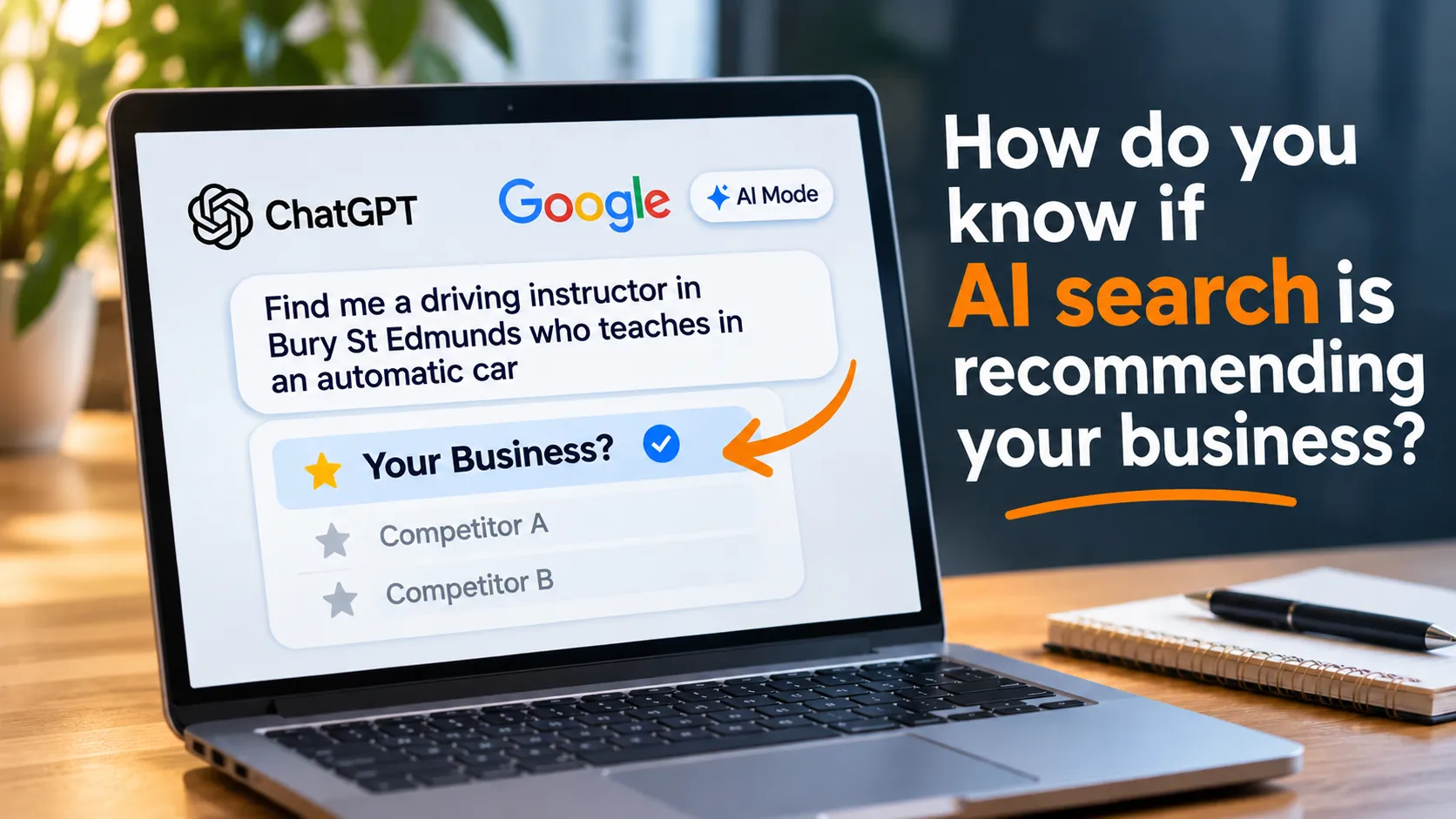
Think about the last time you searched Google for something. Did you type two or three keywords, or did you ask Google a complete question?
For years, businesses have searched Google with short phrases like:
website designer in Suffolk
People still search like this, but now that Google has AI search results and AI tools like ChatGPT are so popular, we’re also getting much more chatty in the way we search.
Google has said that people using its AI Mode are asking questions that are two to three times longer than traditional Google searches.
Instead of trying to work out the perfect few words to type into Google, we can now explain exactly what we’re looking for.
Not just keywords – proper questions
Someone looking for a website designer might previously have searched:
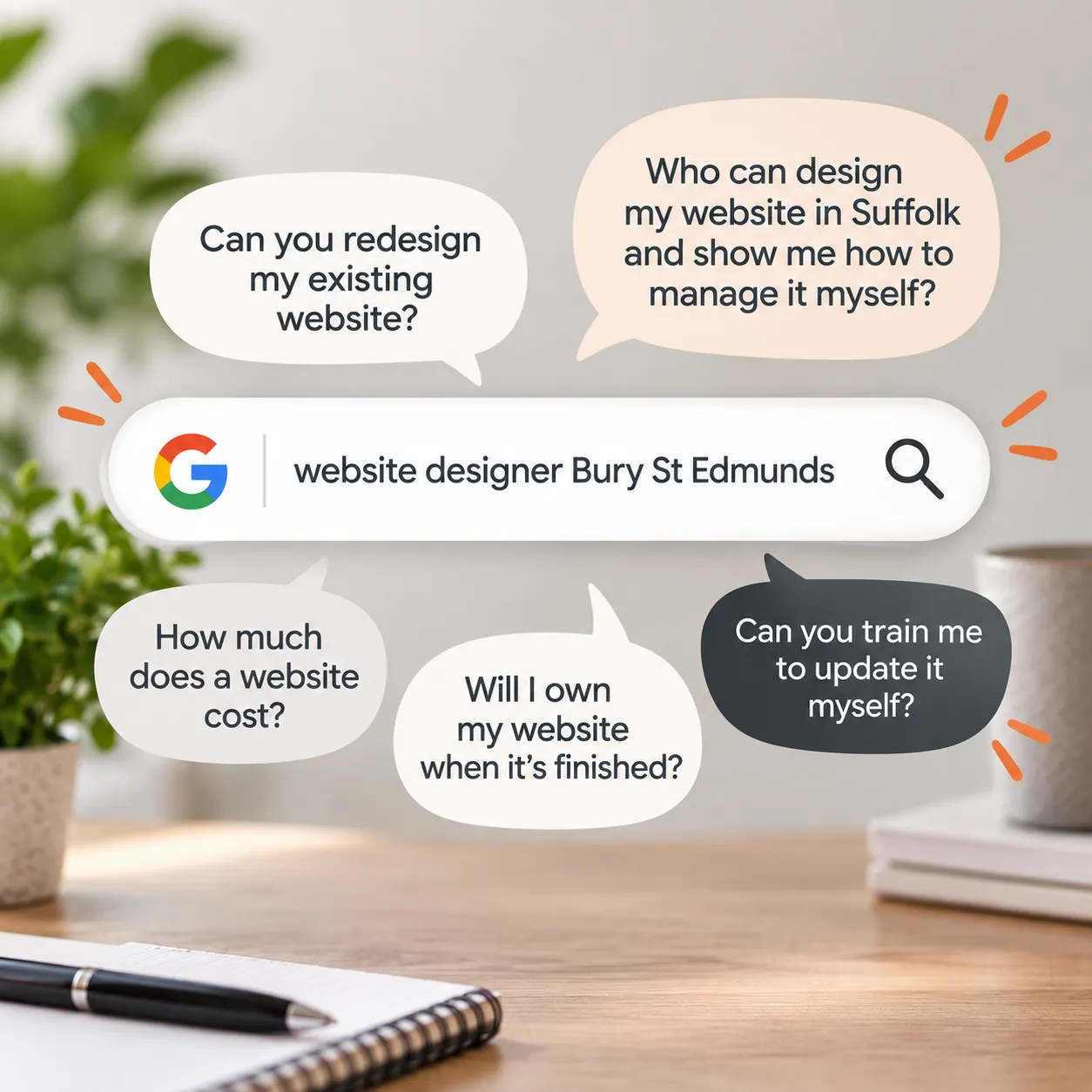
Website designer Bury St Edmunds
Now they might search:
Can you find someone in Suffolk to build a WordPress website and train me to manage it myself?
Here’s what comes up in the ai overview results:

Those types of searches tell Google (or an AI search tool) a lot more about what the person actually wants.
They’re not just looking for a website designer, they’re looking for someone in a particular area, who will build the website and then train them so they won’t need to depend on that person every time they want to edit or add something to their site.
This changes what info you need to have on your website so people can find you
It doesn’t mean you should stop thinking about the shorter keywords people use – they’re still important. But your website also needs to provide enough useful information for search engines and AI tools to understand the more specific things you offer.
For example, my website doesn’t just say that I design websites. It also explains that:
- I design websites in Bury St Edmunds, Suffolk
- my websites are built using WordPress
- you own and control your website when it’s finished
- websites are provided for a one-off fixed price rather than tying you into a monthly fee
- I can train you to manage and update the website yourself
- I can manage it for you instead if you’d rather not do it yourself
- I’m still available for support after the website has gone live
These are all things a potential client might include when asking Google or an AI tool to find the right website designer for them.
FAQs are now even more useful
This is one of the reasons I’ve recently spent time improving the FAQ sections on my own website.
My Website Design FAQs answer questions including:
- Can you redesign my existing website?
- Will I own my website when it is finished?
- Can you write the content for my website?
- Can I update the website myself afterwards?
- Can you look after my website for me?
- How much does a website cost?
- Will I have to pay a monthly fee?
These FAQs are useful for people visiting my website, but they also give search engines much more information about what I provide.
Rather than expecting Google or an AI tool to work out that I offer training, for example, I’ve actually told it.
I’m working on improving my website for AI too
I’ve been testing some of these searches for Belluber. If I ask Google to find someone who can design my website in Bury St Edmunds and show me how to manage it myself, Belluber appears in the AI results, but change the wording of the question and I don’t necessarily appear.
Something I’m working on is improving Belluber’s visibility for more Suffolk-wide AI searches, rather than mainly Bury St Edmunds searches.
Also, coming up in AI searches isn’t something you can optimise once and tick off a list. Try and understand (or research) what potential customers are looking for, make sure your website answers those needs and continue to improve your content.
Think about what your customers would actually ask
A useful thing to try is instead of thinking about SEO keywords, imagine someone asking an AI assistant to find a business like yours. What would they ask for?
They might mention their location, budget, a specific problem, the type of service they need, something they’re worried about or a requirement that’s important to them.
Then look at your website.
Does it contain the information needed to answer their potential questions?
If it doesn’t, that gives you some very useful ideas for content you could add – not just to help with search visibility, but to help potential customers decide if you’re the right business for them.
If you find my articles useful, add Belluber as a preferred source on Google to see more of my website and marketing advice in Google Search.
continue reading